
Chiller
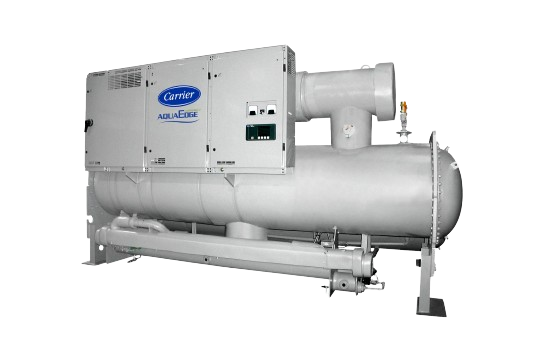
Chiller systems are central HVAC solutions that cool water or a water-glycol mixture for large buildings, commercial facilities and industrial processes. The chilled fluid is circulated by pumps to fan coil units, air handling units or process equipment, where it absorbs heat before returning to the chiller. The refrigeration circuit normally works through four main components: the evaporator removes heat from the water loop, the compressor raises refrigerant pressure, the condenser rejects the collected heat, and the expansion valve reduces pressure before the cycle begins again. Chillers are mainly classified as air-cooled or water-cooled according to the method used to reject heat. An air-cooled chiller transfers condenser heat directly to outdoor air with fans and does not normally require a cooling tower, which can simplify installation and maintenance. A water-cooled chiller transfers heat to a separate condenser-water loop and usually operates with a cooling tower or dry cooler; when correctly designed, it can provide high efficiency and substantial cooling capacity. Chiller systems are used in office buildings, hotels, hospitals, shopping centres, manufacturing plants, data centres and other large facilities that require stable central cooling. Selecting the right chiller requires more than comparing nominal capacity. The cooling load, outdoor design temperature, water availability, installation space, acoustic limits, full-load and part-load efficiency, refrigerant type, control features, redundancy and access to technical service should all be evaluated. Professional system design, correct hydraulic balancing, suitable pumps and regular maintenance support stable operation, controlled energy consumption and a longer service life. At Euroclima, air-cooled and water-cooled chillers can be assessed according to project conditions to create an efficient cooling solution for commercial and industrial applications.