
Ducted Fan Coil Units
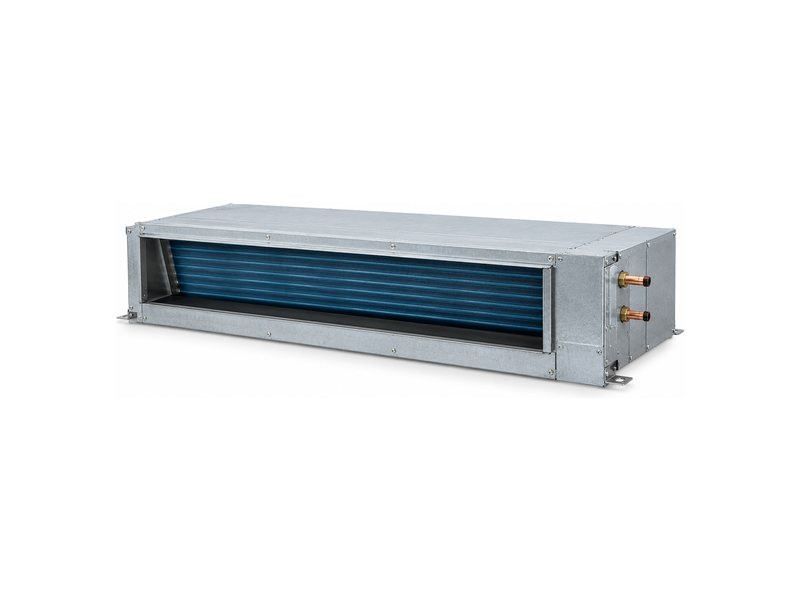
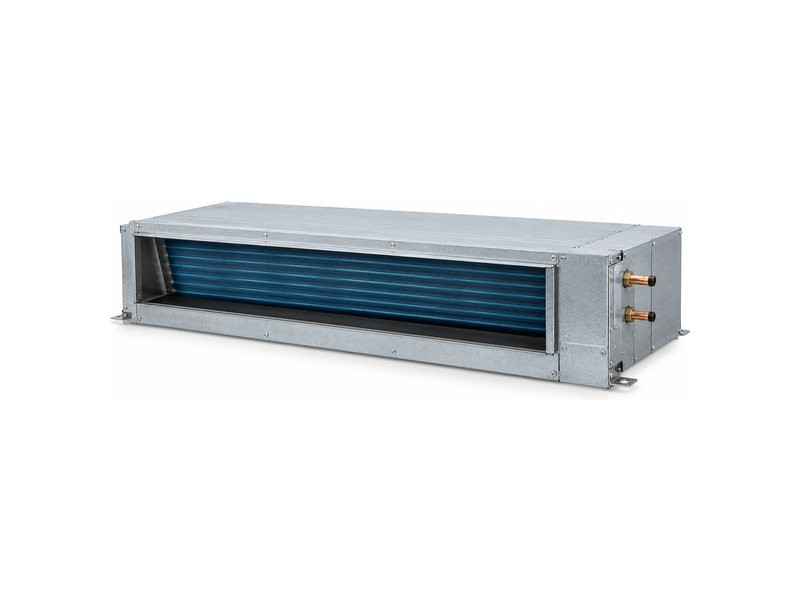
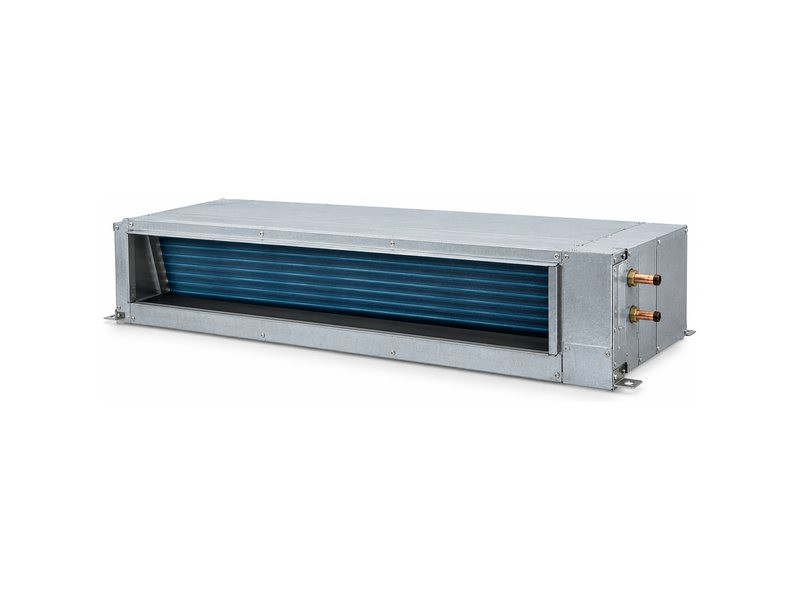
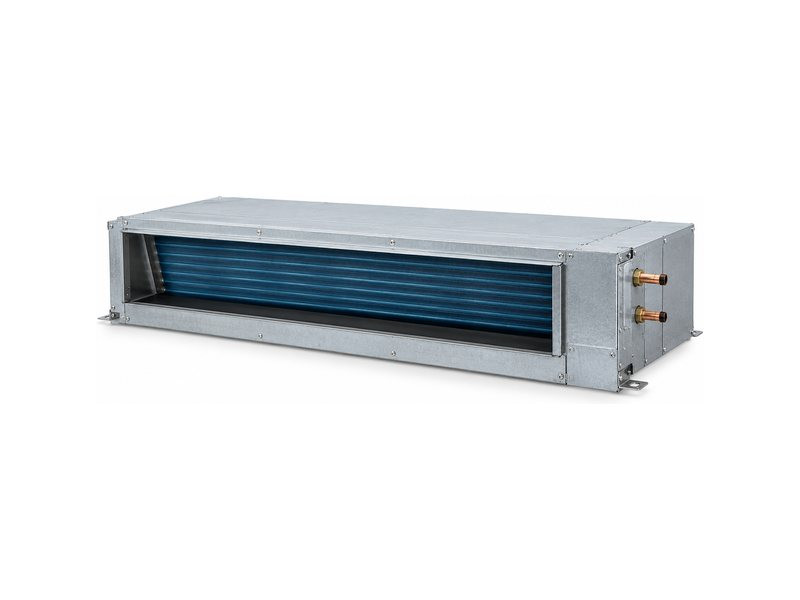
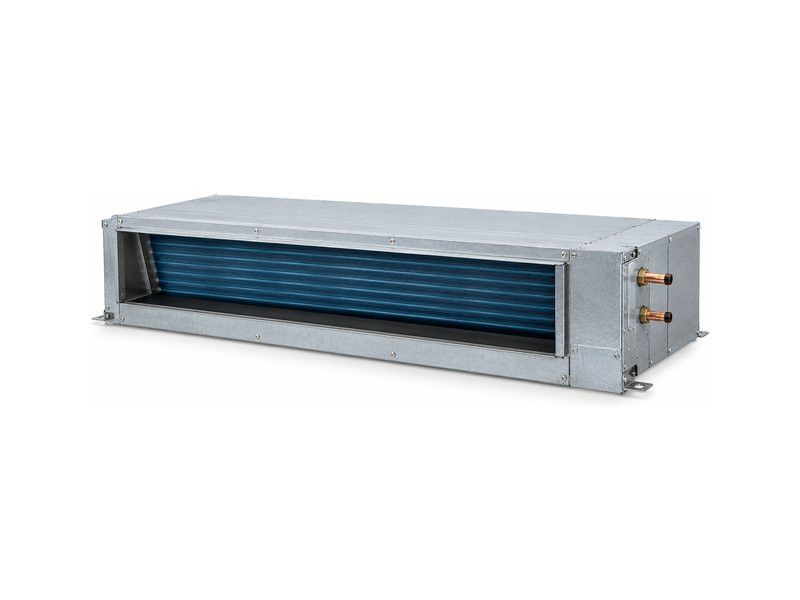
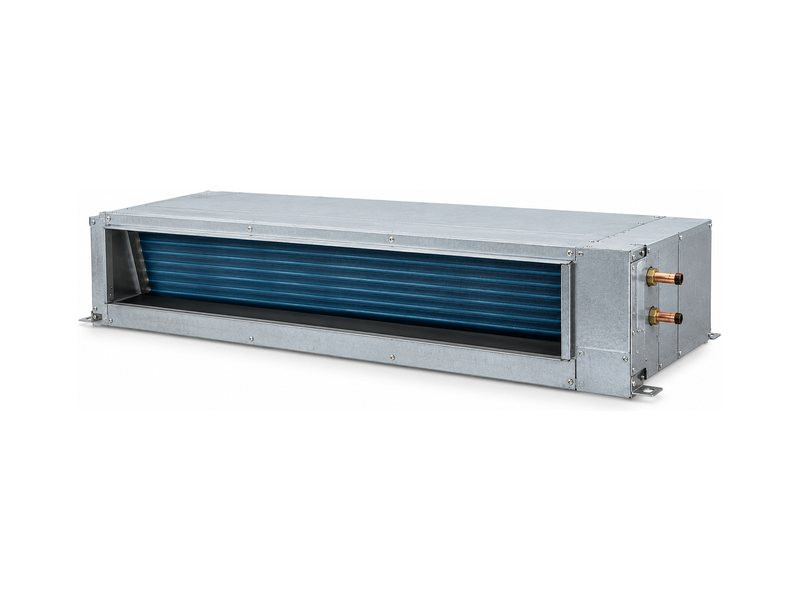
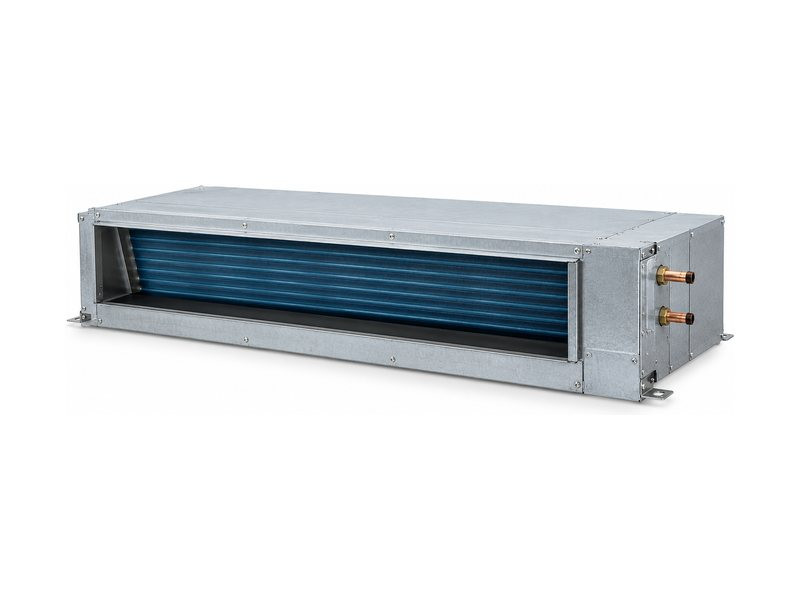
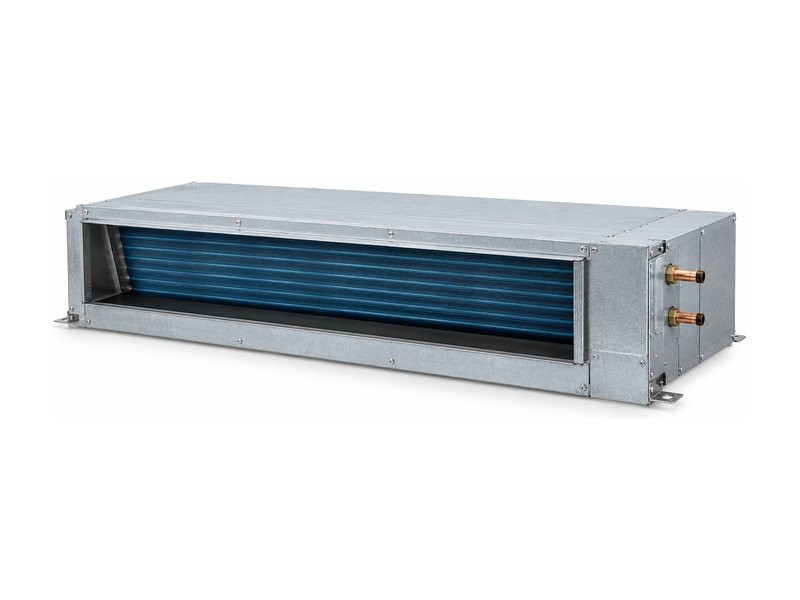
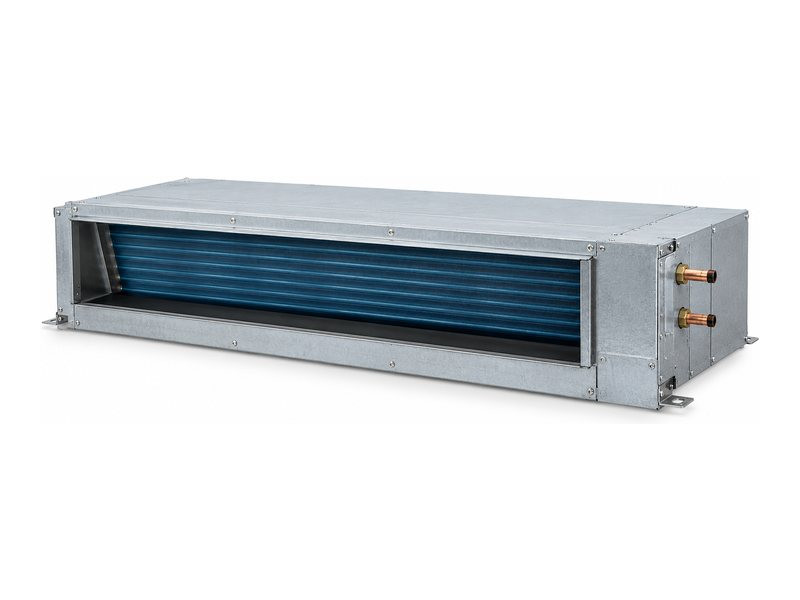
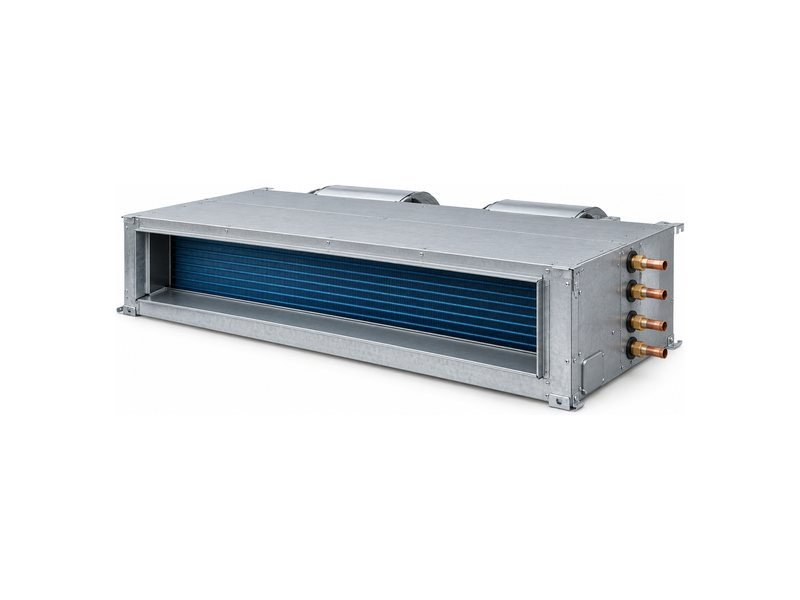
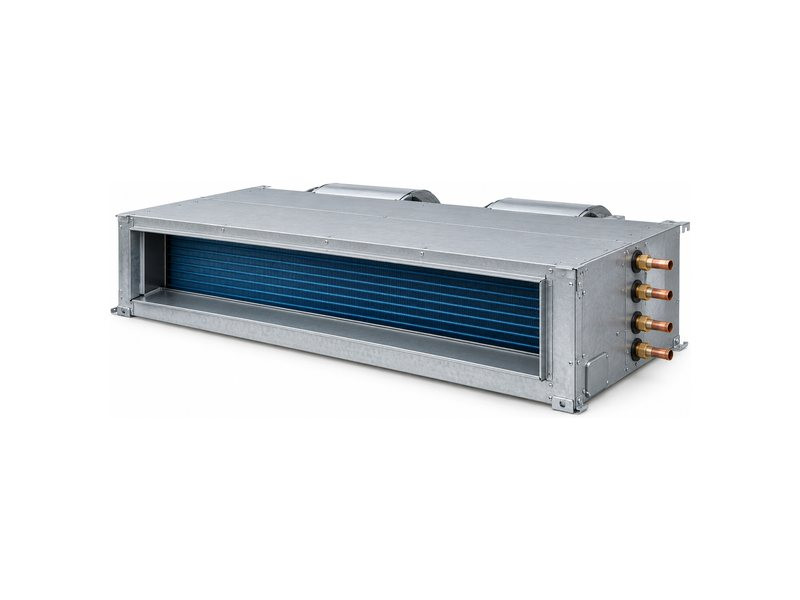
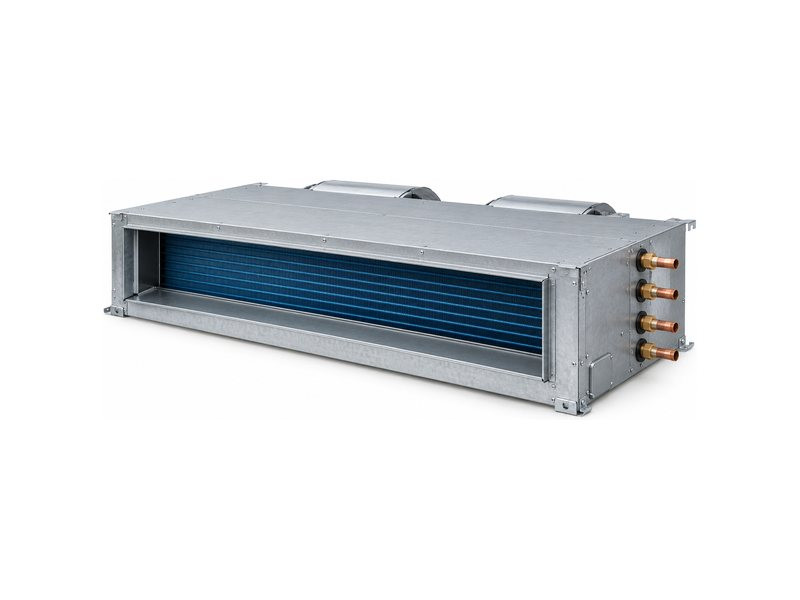
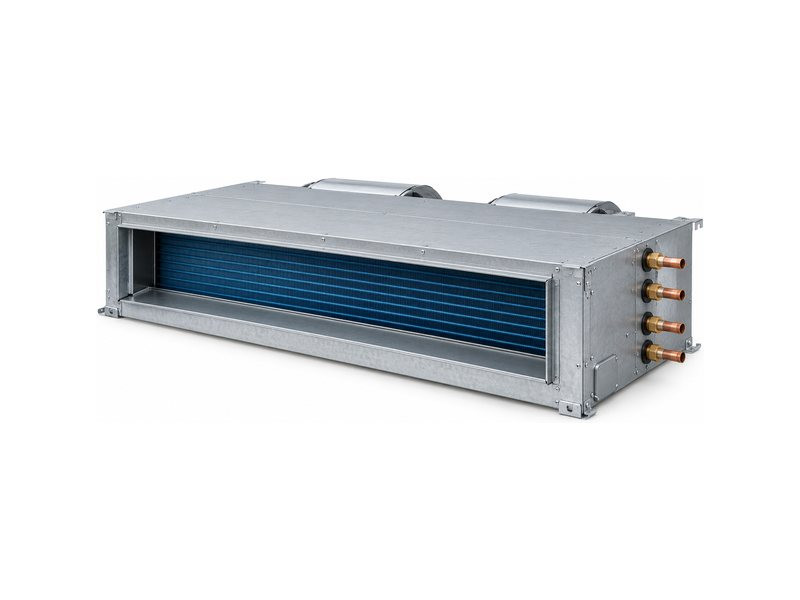
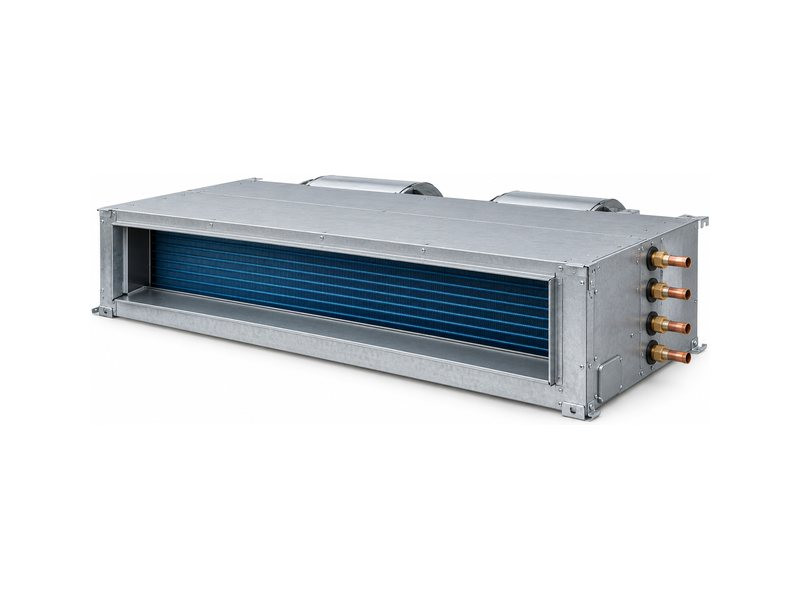
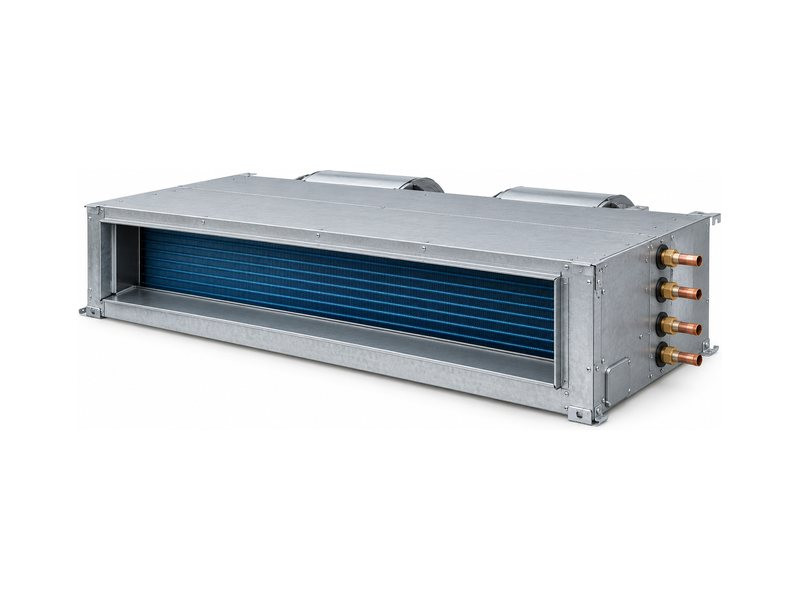
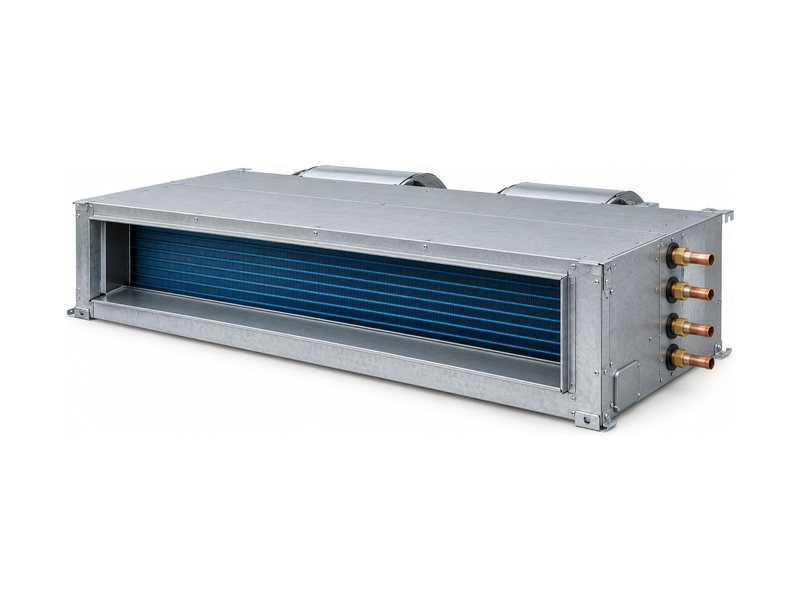
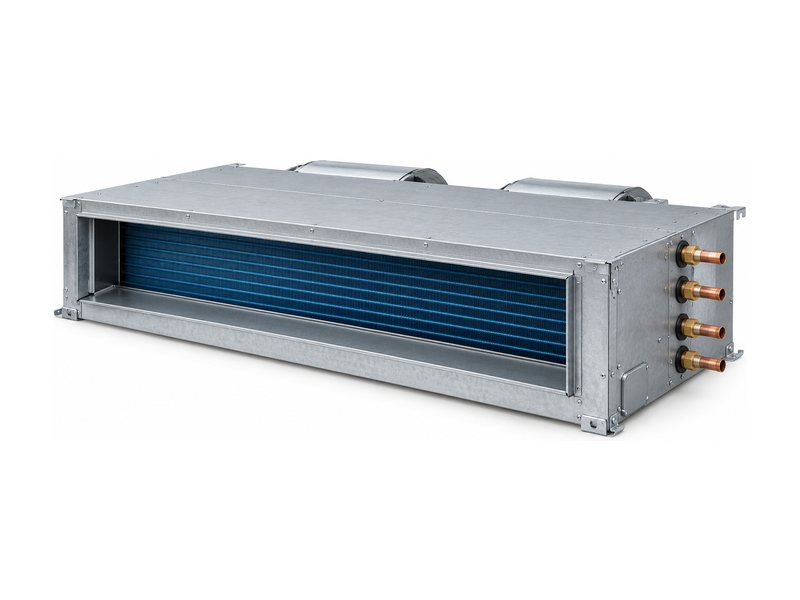
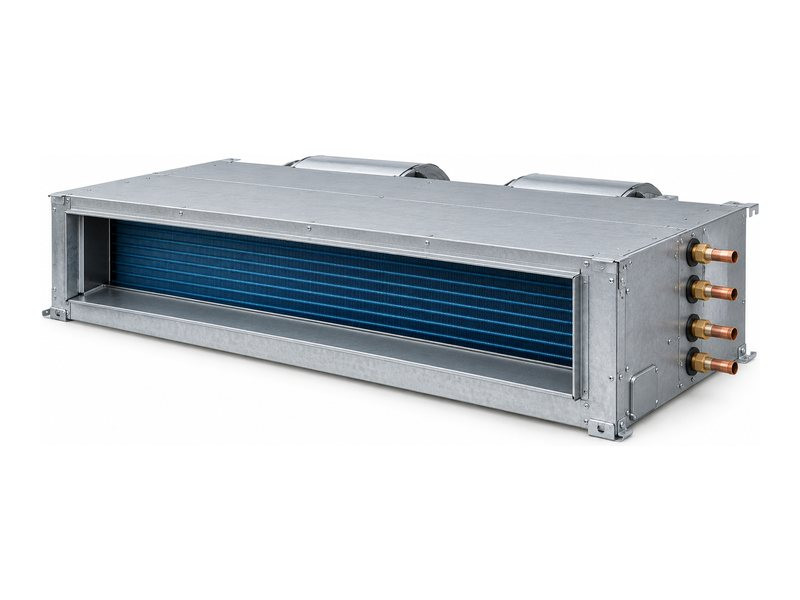
Ducted fan coil units are concealed hydronic terminals that deliver conditioned air through a short duct network to one or more grilles or diffusers. The unit remains above the suspended ceiling, so only the selected air outlets and return grille are visible in the room. This format provides flexibility in air-distribution layout while preserving the interior design. Midea MKT3 units can serve individual zones in residential, hotel, office and commercial projects.
This category covers 200 to 1400 CFM size classes designed for 30 Pa external static pressure. Two-pipe MKT3 G30-CL versions use the same water circuit for seasonal cooling or heating. Four-pipe MKT3 FG30 models have separate chilled-water and hot-water circuits. A four-pipe arrangement offers greater zone flexibility where different rooms may require different operating modes at the same time.
The 30 Pa rating describes the pressure available to overcome the resistance of filters, plenums, short duct sections, grilles and diffusers. These units are not intended for long or highly resistive duct networks. If duct dimensions, bends, air velocity and outlet losses are not calculated, the unit may fail to deliver the required airflow or acoustic performance. Fan coil capacity and duct-system pressure loss should therefore be assessed together.
The casing must be suspended level, with the drain pan and condensate pipe arranged for reliable gravity flow. Chilled-water pipes and drainage require insulation, while flexible duct connections can reduce the transfer of vibration. Service access should remain available for the filter, coil, fan motor, valve set and electrical box. Bottom or rear return-air arrangements must be coordinated with the selected model and ceiling plan.
When comparing ducted units with cassette, wall-mounted and other fan coil systems, consider visible room elements, duct length, ceiling void and maintenance access. Chillers and air-distribution equipment are listed under cooling and ventilation systems. Final selection requires the room load, water conditions, airflow and calculated external static pressure.