
Recuperators
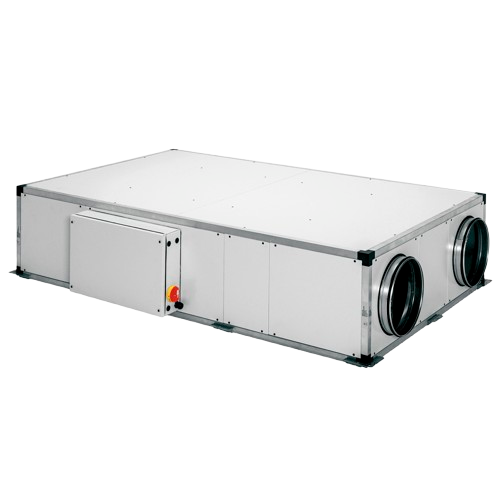
Heat Recovery Ventilators
Heat recovery ventilators are modern ventilation systems designed to provide controlled fresh air exchange while recovering part of the energy from outgoing indoor air. These systems are used in homes, villas, offices, restaurants, clinics, hotels, schools, showrooms and commercial buildings where indoor air quality and energy efficiency are important. Unlike simple exhaust ventilation, a heat recovery ventilator does not only remove stale air; it also helps transfer part of the thermal energy from the exhaust air to the incoming fresh air.
When air exchange is insufficient in closed spaces, carbon dioxide levels may rise, the air may feel heavy, and problems such as odors, humidity and condensation may appear. In modern insulated buildings, windows and doors are usually more airtight, which reduces natural air movement. A heat recovery ventilation system supplies fresh outdoor air in a controlled way and removes used indoor air. As a result, the indoor environment becomes healthier and more comfortable.
The main working principle of a heat recovery ventilator is based on passing two air streams through a heat exchanger. Warm stale indoor air is exhausted from the building and transfers part of its heat to the heat exchanger. Fresh outdoor air passes through the same heat exchange process without mixing with the exhaust air and enters the building preconditioned. In summer, the system can help reduce the cooling load by limiting the impact of hot incoming air. This helps reduce the load on heating and cooling equipment.
Heat recovery systems are commonly used as HRV and ERV solutions. HRV, or Heat Recovery Ventilation, mainly focuses on recovering sensible heat. ERV, or Energy Recovery Ventilation, can also help manage humidity transfer depending on the design of the unit. The right choice depends on climate conditions, humidity level, building use, occupancy and project requirements. For this reason, ventilation systems should be selected according to the real technical needs of the building.
In the global market, demand for heat recovery ventilators continues to grow due to energy-efficient building design, increasing attention to indoor air quality and the need to reduce energy losses in HVAC systems. In modern buildings, heating and cooling equipment alone is not enough. If fresh air exchange is not designed correctly, comfort and healthy indoor conditions cannot be fully achieved. Heat recovery ventilators combine ventilation, energy saving and indoor climate quality in one HVAC solution.
In Azerbaijan, heat recovery ventilators are especially relevant for Baku, Absheron and modern construction projects where airtight buildings are becoming more common. New villas, private houses, offices, restaurants, clinics and commercial spaces increasingly require both energy efficiency and stable fresh air supply. Opening windows during winter can cause heat loss, while opening them during summer can increase the cooling load. A heat recovery ventilation system helps exchange air in a controlled way while supporting a more stable indoor climate.
When selecting a heat recovery ventilator, it is important to consider the building area, number of rooms, required airflow rate, number of occupants, duct layout, filtration level, noise level, heat recovery efficiency, drainage needs and installation conditions. If the unit is not selected correctly, it may not provide enough air exchange or may cause noise, air balance problems and unnecessary energy loss. Therefore, heat recovery ventilation systems must be calculated and installed professionally.
Euroclima offers professional support in selecting and evaluating heat recovery ventilators for residential, office, villa and commercial projects. A properly designed heat recovery ventilation system provides fresh air, more stable indoor temperature, lower energy loss and long-term comfort. Heat recovery ventilators are an important solution in modern HVAC projects where healthy indoor air quality and energy efficiency are required.